
Summary: Max My Ride magazine (issue 26, June 2011) tested two NF Additives products on a chassis dyno with three cars. The Audi S4 V8, with no modifications at all, gained 7.5 kW (+5.2%) and 30 Nm (+10.8%) with NF Ultra Race Fuel Concentrate alone. On the turbocharged Subaru Impreza WRX STi, the extra octane allowed a more aggressive tune that raised power by 32%.
How the test was carried out
The measurements were taken on the dyno at WRC Tuning, with the help of NF Additives staff. The procedure was the same for all three cars:
- Baseline runs on normal fuel.
- The additive was added to the tank and the car was driven for about 30 km.
- New dyno runs.
- After about 3 days, to let the ECU adapt to the new fuel, final runs.
The additives tested
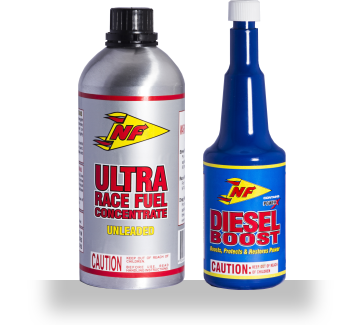
- NF Ultra Race Fuel Concentrate (1 litre, for petrol): +6 RON according to the test, with 1 litre in 55-60 litres of 95 RON petrol.
- NF Diesel Boost (300 ml, for diesel): 300 ml in 50 litres of diesel.
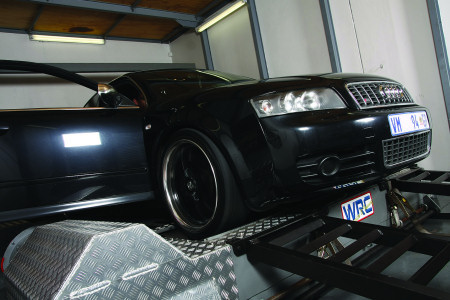
Audi S4 V8 Quattro (2004): naturally aspirated petrol, unmodified
The clearest result of the test: a naturally aspirated engine with no ECU changes at all, using only NF Ultra Race Fuel Concentrate (1 litre in 60 litres of 95 RON petrol).
| Run | Power | Torque |
|---|---|---|
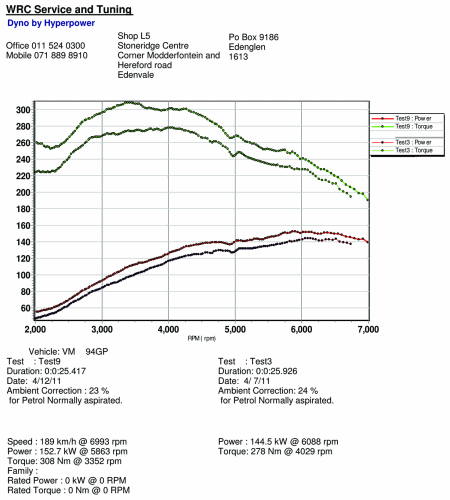
| Baseline (95 RON petrol) | 144.5 kW at 6,088 rpm | 278 Nm at 4,029 rpm |
| With additive, after 30 km | 149.2 kW at 5,844 rpm | 299 Nm at 3,640 rpm |
| With additive, after 3 days | 152.0 kW at 5,863 rpm | 308 Nm at 3,352 rpm |
Gain: +7.5 kW (+5.2%) and +30 Nm (+10.8%). Peak torque also arrived almost 700 rpm earlier, which you notice in the response in lower gears and when overtaking.
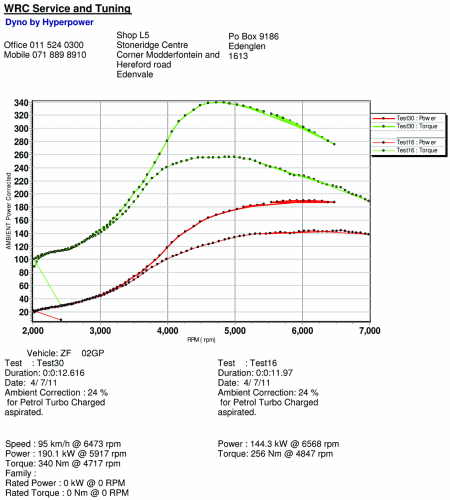
Subaru Impreza WRX STi Type RA: turbocharged petrol
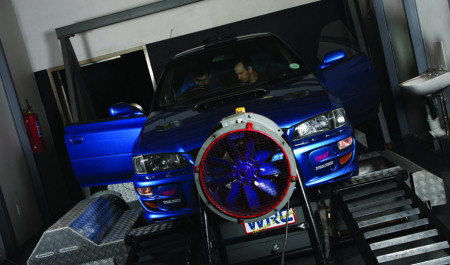
In a turbocharged engine, octane is what limits how much boost pressure and ignition advance the engine can take without knocking. With NF Ultra Race Fuel Concentrate (1 litre in 55 litres of 95 RON petrol), the tuner was able to raise boost from 0.9 to 1.2 bar and advance the ignition by 12 degrees.
| Run | Power | Torque |
|---|---|---|
| Baseline (0.9 bar boost) | 144.3 kW at 6,568 rpm | 256 Nm at 4,847 rpm |
| With additive + tune (1.2 bar, +12° advance) | 190.9 kW at 5,917 rpm | 340 Nm at 4,717 rpm |
Gain: +46.6 kW (+32%) and +84 Nm (+33%). This improvement is the result of the additive combined with the remap: the higher octane is what made that tune possible without the risk of knock.
Volkswagen Polo TDI Sportline (2007): diesel
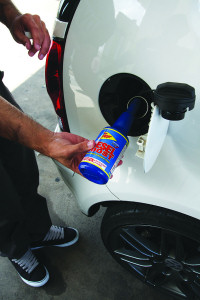
NF Diesel Boost was added (300 ml in 50 litres of diesel).
| Run | Power | Torque |
|---|---|---|
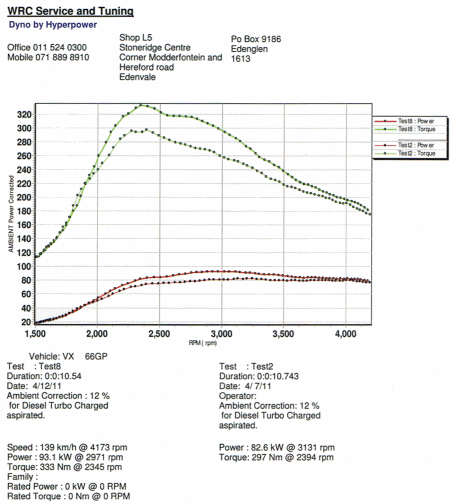
| Baseline | 82.6 kW at 3,131 rpm | 297 Nm at 2,934 rpm |
| With NF Diesel Boost, after 30 km | 83.0 kW at 3,071 rpm | 293 Nm at 2,380 rpm |
| After 3 days + stage 1 remap | 93.1 kW at 2,971 rpm | 333 Nm |
To be transparent: on the dyno, the additive on its own barely changed peak power, although peak torque arrived about 550 rpm earlier. The jump to 93.1 kW came with the remap. The benefits of NF Diesel Boost lie elsewhere: a higher cetane rating, better cold starting, cleaner combustion, and protection and lubrication of the pump and injectors.
The magazine's conclusion
Based on the figures, Max My Ride concluded that octane boosters do work. It added a piece of advice we agree with: when you add performance parts or additives, the car must be tuned correctly to get the most out of them.
NF products in our shop
- NF Diesel Boost: the diesel additive tested on the VW Polo.
- NF Ultra Race Fuel Concentrate is not part of our current range. For tuned or remapped petrol cars, our racing option is NF Race Octane Booster. Browse our full range of octane boosters.
Frequently asked questions
Does an octane booster add power to a standard car?
It can, if the ECU is able to take advantage of the extra octane. In this test, the naturally aspirated, unmodified Audi S4 V8 gained 7.5 kW and 30 Nm with the additive alone.
Why did the Subaru gain so much power?
Because, as well as the additive, it was remapped: more boost (from 0.9 to 1.2 bar) and 12° more ignition advance. The higher octane is what allowed this without knock.
How long does it take to notice the effect?
In the test there were already improvements after 30 km, and the best results came after about 3 days, once the ECU had adapted to the new fuel.
Does NF Diesel Boost add power?
In this test, on its own it barely changed peak power on the dyno. Its main job is to raise the cetane rating, improve cold starting and protect the injection system.
Source: Max My Ride magazine, issue 26, June 2011. Measurements on the WRC Tuning dyno. Images courtesy of NF Additives.