
Black or White Exhaust Smoke: What Each Color Means
Is your car producing black or white exhaust smoke and you're not sure how serious it is? We explain what each color means, when it's just condensation or a fuel issue, and when it's a fault that needs a workshop.
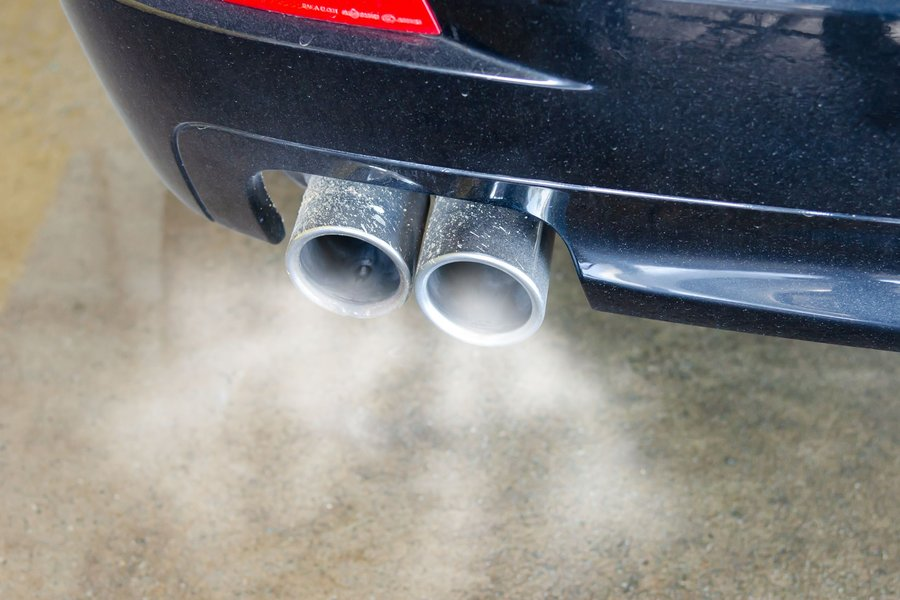
Black or White Exhaust Smoke: What Each Color Means
"My car smokes black", "white smoke coming from the exhaust", "what does exhaust smoke mean"... The color of the smoke tells you a lot about what's going on with your engine. Here's what each color means, when it's normal, and when it's worth taking action.
Why is my car smoking from the exhaust?
There are three main colors, each with a different origin:
- Black smoke: excess unburned fuel relative to air (rich mixture), very common in diesels.
- White smoke: can be simple water condensation (normal when cold) or a sign of water in the fuel, or a more serious fault.
- Blue smoke: engine oil burning, not fuel.
Black exhaust smoke: what it means and why it happens
Black smoke appears when the engine burns more fuel than it can properly mix with air. It's more common in diesel engines, and its most common causes include:
- Dirty injectors spraying fuel unevenly.
- A clogged air filter, reducing airflow.
- Insufficient octane or cetane for the engine.
- Turbo or EGR issues that disrupt the air-fuel mixture.
The first two can improve with fuel system cleaning; the last two usually need a workshop diagnosis.
White exhaust smoke: normal condensation or something more serious
A thin wisp of white smoke on a cold start that disappears within seconds is normal: it's simple water condensation in the exhaust system, in both petrol and diesel engines. The problem is when white smoke is persistent, heavy, or has a sweet smell. This can be due to:
- Water in the fuel: if water mixes with the fuel, some of it burns off and leaves through the exhaust as vapor.
- A damaged head gasket or other internal fault: coolant enters the combustion chamber and burns, producing thick, persistent white smoke, usually with a sweet smell and dropping coolant level.
The first case can improve by treating the fuel; the second is a mechanical fault that needs a workshop as soon as possible.
What about blue smoke? (burning oil)
Blue smoke means the engine is burning oil, usually due to worn piston rings, valves or seals. It has nothing to do with the fuel and isn't fixed with an additive: it's a mechanical fault that needs a workshop inspection.
How do I know if the smoke is normal or a real problem?
- A thin puff of white smoke on a cold start that clears quickly is usually normal.
- Thick, persistent white smoke, a sweet smell, or dropping coolant level is not normal: it needs a workshop.
- Occasional black smoke under hard acceleration can be mild; constant or very heavy black smoke points to a cause worth checking.
- Any blue smoke means the engine is burning oil and needs inspection.
What happens if I keep driving with the car smoking?
If the cause is fuel-related (dirty injectors, low cetane/octane, water in the tank), continuing to drive increases consumption and wear on injection components. If the cause is a fault (head gasket, turbo, oil consumption) and it's ignored, the damage usually gets worse and can end up far more expensive to repair.
Is it dangerous to drive if my car is smoking?
Mild, occasional smoke usually isn't an immediate risk. Thick white smoke with dropping coolant level can lead to engine overheating, so it's best to stop and get it checked as soon as possible in that case.
How to fix black or white smoke depending on the cause
If you suspect black smoke is caused by dirty injectors or insufficient cetane/octane, a cleaning and boosting additive can help. If white smoke is due to water in the fuel, a specific water-removing additive can be the solution. But if there's coolant loss, a sweet smell, oil consumption, or the smoke is very thick and persistent, the right move is a workshop visit before trying any additive.
NF Diesel Boost and NF Fuel Guard: what the product sheets say
For black smoke in diesel engines, NF Diesel Boost's product sheet states that it:
- Increases the diesel cetane number by up to 10 points.
- Reduces engine smoke and ash.
- Adds lubrication to the injection pump and injectors, helping prevent wear.
- Improves cold starts and helps eliminate hesitation and jerking.
- One bottle treats up to 100 litres of diesel (one tank).
The sheet mentions a general reduction in smoke and ash, not specifically "black smoke", so we're not promising it as a guaranteed fix in every case.
For white smoke caused by water in the fuel, NF Fuel Guard's product sheet states that it:
- Dissolves water and condensation in fuel tanks.
- The dissolved water burns off with the fuel and leaves through the exhaust as vapor.
- Revitalizes aged fuel and removes varnish, gum and acids from the tank.
- Is safe for catalytic converters and oxygen sensors.
- One bottle treats up to 1,200 litres of petrol or diesel (300L in extreme cases).
You can see all the details on NF Diesel Boost and NF Fuel Guard.
How to prevent smoke from coming back
- Use quality fuel whenever possible.
- Clean the injection system periodically.
- Check the air filter according to the manufacturer's intervals.
- Be careful when refuelling in the rain or from poorly sealed storage tanks, to avoid water getting into the fuel.
- Check coolant and oil levels regularly; any unusual drop deserves a check-up.
Frequently asked questions
What does black exhaust smoke mean?
It means the engine is burning more fuel than it can properly mix with air. It's very common in diesels and can be caused by dirty injectors, a clogged air filter, low cetane, or turbo/EGR issues.
What does white exhaust smoke mean?
A thin wisp of white smoke on a cold start is normal (condensation). If it's thick, persistent, or smells sweet, it could be due to water in the fuel or a fault like a head gasket.
What does blue exhaust smoke mean?
It means the engine is burning oil, usually due to worn piston rings, valves, or seals. It has nothing to do with the fuel and needs a workshop inspection.
Is a bit of white smoke on cold start normal?
Yes, if it's thin and clears within seconds. If it's thick and persists, that's not normal.
Is black smoke only a diesel thing?
It's much more common in diesels, though petrol engines can also produce black smoke if the mixture runs too rich.
Does an additive fix black exhaust smoke?
It can help if the cause is dirty injectors or insufficient cetane/octane. It won't fix a clogged air filter or turbo/EGR faults.
Does an additive fix white exhaust smoke?
If the white smoke is due to water in the fuel, a specific additive can help dissolve it. If it's due to a damaged head gasket or other internal fault, the additive won't fix it — that needs a workshop.
Is it dangerous to drive if my car is smoking?
Mild, occasional smoke usually isn't immediately dangerous. Thick white smoke with coolant loss can lead to overheating, so it's best checked as soon as possible.
When does exhaust smoke definitely need a workshop?
When white smoke is thick and persistent, smells sweet, coolant is dropping, the smoke is blue, or black smoke doesn't improve after checking filters and trying an additive.
How do I stop my car from smoking again?
By using quality fuel, cleaning the injection system periodically, checking the air filter, and keeping an eye on coolant and oil levels regularly.